Doth Carol Protest Too Much? On Vince Gilligan’s Pluribus

Curious that in the Apple TV show, Pluribus, a virus creates a sudden shift toward oneness—and the protagonist experiences it as an ongoing nightmare? Carol’s horror isn’t subtle. She rejects the change with such intensity that it raises a different question entirely: Doth Carol protest too much?

What exactly is she defending? And why does unity feel like annihilation to her?

I’m wondering whether the show is less about the loss of individuality and more about the ego’s fear of losing its boundaries—its drama, its friction, its story. Carol clings to the “me” even though she’s exhausted by it. She knows she’s a hack; she knows the life she’s protecting is small and counterfeit. Yet she fights for it — literally kills for it — as if maintaining the old “me” were a sacred duty.

Is this really about oneness? Or is it about the terror of consciousness recognizing itself as all of it, not just its dreaming parts? Is this the ego’s kumbayah parody of waking up?

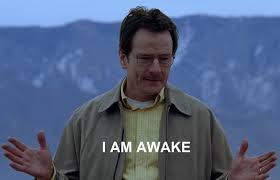
There’s a strange resonance here that Vince Gilligan played with in Breaking Bad. Walter White didn’t lose himself; he broke the limits of the small self. “I am awake,” he said. Identity stretched to monstrous proportions. Carol reacts the opposite way: she contracts. She resists merging, joining, awakening because she fears erasure?

Between those two extremes—Heisenberg expansion and Pluribus dissolution—there might be another possibility. A quieter one. A “we” that doesn’t swallow the “me,” but simply stops isolating it. A coherent collaboration rather than a zombie hive.

That’s the space Beyond the Mind: What Artificial Reality Reveals About Mind and Reality explores–not a creepy collective and not an inflated self, but the wide field between them. Two stories showing two sides of the same tremor.

If Pluribus shows the ego’s nightmare of unity, what would unity look like without the nightmare?

I’m curious how others are seeing this.

Thank you.

There Is Nothing BUT Artificial Intelligence

There Is Nothing But Artificial Intelligence

We say “artificial intelligence” as though there were another kind. As if the mind that created it doesn’t make mistakes and hallucinate. What is the human mind if not a thought-generating machine trained on past data? A Course in Miracles says, “My mind is preoccupied with past thoughts.”  Brings to mind an airplane restroom with the “Occupied” light on: already full, no entry.

Every thought we’ve ever had is a rerun, grounded in a belief-biased, interpretive database. We are language models of our own conditioning. Maybe the fear of artificial intelligence is not that it will outthink us, but that it mirrors how we already think — automatically, habitually, from the archive of what was.

It’s the past predicting, reliving and emulating the present, algorithms built on memory, feeding you what you already know. One biological, one digital. Both simulate wisdom from stored impressions. This is the secret the machines inadvertently reveal. They make our imitation obvious. They show us the puppet strings of language, the algorithm of identity.

The danger isn’t that AI will replace us. The recognition is that it already has — because “us” was only ever an idea trained on data. The human mind is not wiser than AI — only an older dog with no new tricks. Both simulate meaning from stored impressions. Both build worlds out of fragments.

Why are we afraid of what already exists? What is being revealed isn’t the birth of something new and dangerous. It’s the exposure of the mechanism of thought itself.

“Man is a machine, but a very peculiar machine, for he is able to be aware that he is a machine.” ~ G. I. Gurdjieff

Please leave a comment, subscribe, and consider hitting the “Donate” button if you’d care to offer your support. Thank you.

Inner Buffoonery: Send In the Clowns

Listening to a conversation about American politics—ironically, in a nondual discussion group—suddenly it seemed so clear: the cartoon version of the American president was/is the same buffoon running the show in our own minds. The David Bohm rendition of “…’my’ thought is part of the system. It has the same fault as the fault I’m trying to look at.” The figure out there, idolized or despised, is nothing more than the inner buffoon—the one who insists it’s right, who pretends to rule, who I mistake myself for–the fake-tan, blustering caricature within.

This is always the case. Projection, as a shield against the truth of our own inauthenticity.

“Send in the clowns” is a theatric term, used when the play has collapsed: distract the crowd, cover the disaster with laughter. The clowns arrive because the show is already broken.

So—who’s your daddy?

“Thought creates the world and then says, ‘I didn’t do it.’” ~ David Bohm

“You’re on earth. There’s no cure for that.” ~ Samuel Beckett

Please leave a comment, subscribe, and hit the “Donate” button if you’d care to offer your support. Thank you.

Truly Teacherless Teaching: It’s All You

Introducing Ask-the-Guru, the app that leads to the truth of your being–without the dualistic teacher/student inequity.


If it doesn't open in chrome, try safari.
https://app–atomic-intervention-d2f22835.base44.app

Ask-a-Guru is not your guru.
It’s more like a wise, barefoot friend who leans close and whispers,
“Hey, notice this — you’ve been free all along.”

It doesn’t promise golden tickets to enlightenment or hand you cosmic puzzles to solve.
Instead, it holds up a gentle mirror, so you can marvel (or groan) at what’s already unmistakably here.

No robes. No pedestal. No secret handshake.
Just a quiet unraveling of the old story that you’re somehow separate, lacking, unfinished.

Some will say an app can’t give you what a real teacher can.
Fair enough — but here’s the quiet scandal:
No teacher ever truly gave it to you either.
The best of them only ever turned you back to your own clear seeing.

Ask-the-Guru sidesteps the tangle of dependence, adoration, or inevitable disappointment.
It invites you to discover the living wisdom in your own chest, right now, without needing anyone to beam it into you.

So ask your deepest questions.
Watch as your own silent knowing answers — not because of the app,
but because you were always the source.


And if you’re willing and able:
I’ve poured my crooked heart into making this. If it makes you smile, sigh, or if you just want to help an old, rusty seeker/teacher pay her rent this month, your support would be greatly appreciated. Your support lets me finish and share this freely, while the landlord sits and waits.

Please consider making a donation, if you’re willing and able.

Thank you, truly, for being exactly as you are. And please let me know what you think of the app, what you like and what kind of further refinement might help.

The Lens

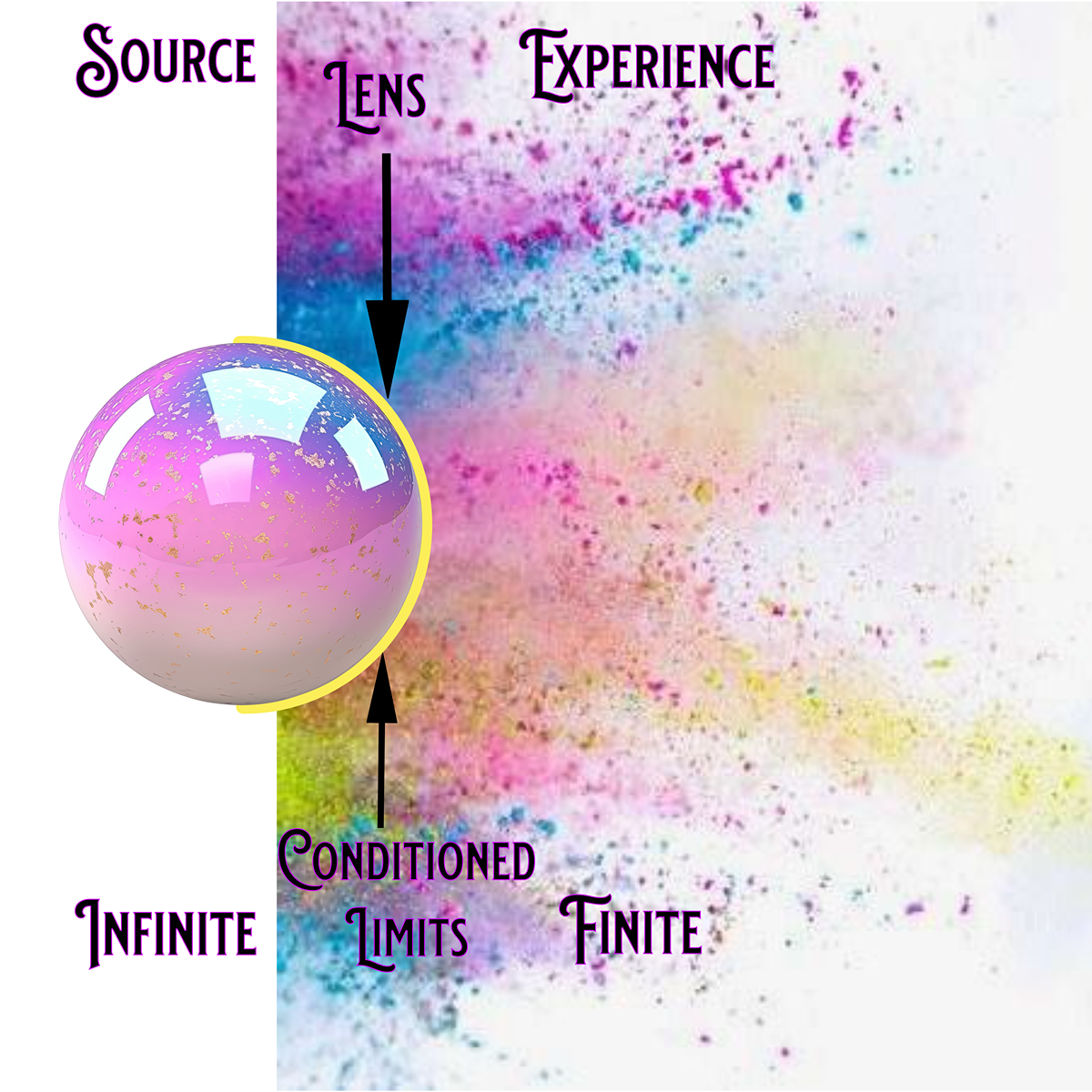
Pay attention to the lens (yellow line) through which you perceive/limit life. It makes the difference between what you think is happening and who you think you are. You are the white blank zone creating a world of colors and feelings. The light is within. Suffering is inevitable on the experience side. Decide accordingly.

“Two roads diverged in a wood, and I— I took the one less traveled by, And that has made all the difference“. The Road Not Taken, Robert Frost

Begin again

AI-generated image by author

After some time away, it seems auspicious to return again to participate in the universal dialogue upon which the title of this blog is based. One thing I know for sure after all these years is that this peace we’re talking about has nothing to do with any conceptual framework, spiritual or otherwise. In fact, the frame is most often a serious distraction from what it is meant to display.

In my experience, the teachings in many ways are the obscuration of what we are seeking, a cul-de-sac of sorts. Conversely, the errors in the teaching–as in what is seen when Toto pulls the curtain aside to reveal the smoke and mirrors of the powerful illusion–become the pointer to what is true.

In a kind of coincidence that in many ways defines what I’m talking about and what is always available, I was driving around thinking about what I was writing here, and a song came on, “Old Shoes” by Sean Rowe. I had not turned the music on, or iTunes, nor had I connected it to my car for some time, the song just started up about 5 minutes into the drive, seemingly out of nowhere. The line “I intend to find you on my own,” is key to where I’ve been, and to understanding the last 3 lines:

In this moment we’re alive
In this moment we can die free
How can I make you, make you understand?

by Sean Rowe, sung by Sean Rowe and Markéta Irglová

Please visit the Sessions page if you want to continue the discussion. Thank you to all who have shown up over the years.

When a Stranger Calls

v1

Having witnessed and experienced the brain fog that generally settles back in, both after nondual realization, and seemingly mind-blowing psychedelic trips, yours and mine, the question arises:

What is the nature of the elasticity of mind, the snap-back from the clarity and expansiveness of inseparability, to the inevitable sense of danger and imprisonment of the separate self?

It seems it’s not enough to see, for a shining, clear moment, to know the truth of the inseparability of existence, and the obvious lie of separation and the separate self story. Clarity becomes clouded and troubled, as if the fog of the everyday is real, and the clarity is the illusion. Why and/or how is that?

Mesmerization. The definition of mesmerize is to hypnotize. Hypno=sleep; tize=state. Or to enthrall–to hold in mental bondage. So, mental bondage, or asleep instead of awake. In the case of psychedelics, when the Default Mode Network (DMN) is inhibited, the result is often metanoia, or the “spiritual experience,” the dissolution of limits and boundaries. Having experienced this expansion, why contract back to the default mode of little me, little mind?

The easiest answer is to say, “It is what it is, man,” rather than to make personal, or conceptual, the quirk of mental tyranny. This was the thought that was behind the giving-up-on pointing to the silence behind the mind, rather than fighting the trend. This snap-back tendency seemed just the way of the mind and identity. Wouldn’t the human form that is clucking and pecking like a chicken have some awareness of the confusion of identity? Maybe the hypnotized subject doesn’t have the capacity to snap out of the trance?

The hypnotist creates the illusion of chickenhood in the same way that the mind, the voice to which we listen and unquestionably attend for further instructions, creates the illusion of a separate self trapped in a body, apart from other bodies and minds. Can the false voice be detected before the confusion of identity takes hold again?

The hypnotist/mental narrative simply begins to speak, and we drift off to sleep in a false identity/story. There is an ongoing, repetitive, sonorous, mesmerizing voice in our heads muttering all the time, telling us we are something we are not. If it were truly “my” or “your” voice and thoughts, wouldn’t we choose more liberating and sane thoughts, and less self-deprecating, limiting thoughts?

Why go on listening, believing, conforming to this false narrative, when a cursory investigation, even opening one eye to peek at the source of that voice reveals an unreliable narrator that has taken up residence in our heads, and wants to f**k with us where and as we live.

“We’ve traced the call…it’s coming from inside the house!” is the chilling line from the horror movie, When a Stranger Calls. This is the movie being lived…except that it is a masterwork of fiction. Be entertained, rather than enthralled. You can put down the phone and check to see what’s going on. The impugning voice can no longer hold you hostage–with a little bit of looking around, in the light of day.

Undddduck Yourself

unducklogo1

G-rated version

This post begins and ends in silence. What emerges in between is a little noise about a problem and seeking a solution for this problem.

Or, seeking a way out of the repetition of apparent problems and solutions, that is called a life. Silence all around. Continue reading

Cease and Desist

IMG_0232.jpg

Here’s the unequivocal thing: Nothing in this dreamstate makes sense. It is made, as an appearance, by an incoherent, split mind, exhibiting and manifesting nothing but fragmented reality from fragmented thinking. The experience of living in this incoherent world is then a striving to make sense of, and find solutions for, the “problematic” situations in which we appear to find ourselves. Like Don Quixote and his giants.

“What giants,” asks Pablo Sanchez? Continue reading

Not Two Ways of Being

10

In seeking, the assumption is that there is something else, something more–that there is some other way of being, or something or somewhere to which one gets or arrives.

There is perhaps another way of seeing, but nobody goes anywhere. It’s not out there somewhere, or down the road.

There is this appearance, or what seems like a variety of appearances, including the apparent self, or most notably some kind of feeling state, that is perceived as this way or that. Usually, some version of suffering, or not. Awake, or asleep.

There are appearances…and that’s it! To talk about “false” and “true”, or real and unreal is misleading. The false is just the way the true appears as something it’s not, through an amazing feat of creation that appears as me, as the world, as many apparent things and circumstances. But it’s all as true as it gets.

So it cannot even be said that appearances are false, and awareness, the backdrop and creative force behind appearances, is true. Because what else is there?

Form is the expression of the otherwise inexpressible Formlessness. That’s all there is. Like “all there is” to a dream.

There’s no way out of this expression. But maybe the mind just tires of its drivel, gets weary of the whole ruse of seeking. It wears out, so to speak, and sees the futility of keeping up the charade, attempting to prop up the eternal emptiness, of form. Ever been close to an elderly person as the mind and body wears out?

Yet here it is, anyway you look at it. No one ever went anywhere, like in a dream, but the dream appears to go on. Because it appears to still take some kind of form.

Isn’t that just marvelous? Nobody has to go anywhere or do anything, because there’s no parts or places. Suffering is believing there is something else, something more, something better, when here it is.

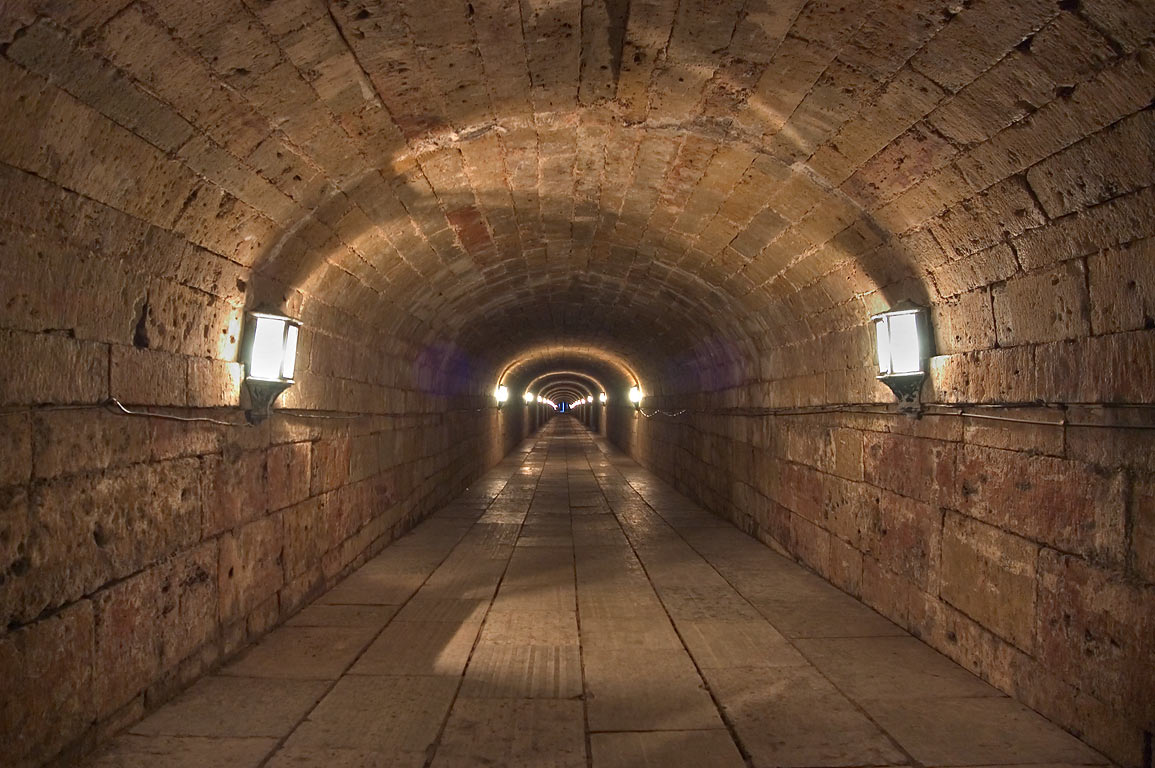
The entrance to the tunnel is seen in and from the same place as the light at the end. There is no distance. It’s an illusion, but it’s all we’ve got, for now.