

Curious that in the Apple TV show, Pluribus, a virus creates a sudden shift toward oneness—and the protagonist experiences it as an ongoing nightmare? Carol’s horror isn’t subtle. She rejects the change with such intensity that it raises a different question entirely: Doth Carol protest too much?
What exactly is she defending? And why does unity feel like annihilation to her?
I’m wondering whether the show is less about the loss of individuality and more about the ego’s fear of losing its boundaries—its drama, its friction, its story. Carol clings to the “me” even though she’s exhausted by it. She knows she’s a hack; she knows the life she’s protecting is small and counterfeit. Yet she fights for it — literally kills for it — as if maintaining the old “me” were a sacred duty.
Is this really about oneness? Or is it about the terror of consciousness recognizing itself as all of it, not just its dreaming parts? Is this the ego’s kumbayah parody of waking up?
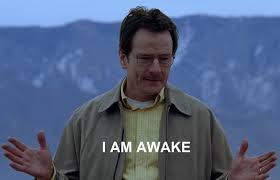
There’s a strange resonance here that Vince Gilligan played with in Breaking Bad. Walter White didn’t lose himself; he broke the limits of the small self. “I am awake,” he said. Identity stretched to monstrous proportions. Carol reacts the opposite way: she contracts. She resists merging, joining, awakening because she fears erasure?
Between those two extremes—Heisenberg expansion and Pluribus dissolution—there might be another possibility. A quieter one. A “we” that doesn’t swallow the “me,” but simply stops isolating it. A coherent collaboration rather than a zombie hive.
That’s the space Beyond the Mind: What Artificial Reality Reveals About Mind and Reality explores–not a creepy collective and not an inflated self, but the wide field between them. Two stories showing two sides of the same tremor.
If Pluribus shows the ego’s nightmare of unity, what would unity look like without the nightmare?
I’m curious how others are seeing this.
Thank you.


 The Deepest Peace