Doth Carol Protest Too Much? On Vince Gilligan’s Pluribus

Curious that in the Apple TV show, Pluribus, a virus creates a sudden shift toward oneness—and the protagonist experiences it as an ongoing nightmare? Carol’s horror isn’t subtle. She rejects the change with such intensity that it raises a different question entirely: Doth Carol protest too much?

What exactly is she defending? And why does unity feel like annihilation to her?

I’m wondering whether the show is less about the loss of individuality and more about the ego’s fear of losing its boundaries—its drama, its friction, its story. Carol clings to the “me” even though she’s exhausted by it. She knows she’s a hack; she knows the life she’s protecting is small and counterfeit. Yet she fights for it — literally kills for it — as if maintaining the old “me” were a sacred duty.

Is this really about oneness? Or is it about the terror of consciousness recognizing itself as all of it, not just its dreaming parts? Is this the ego’s kumbayah parody of waking up?

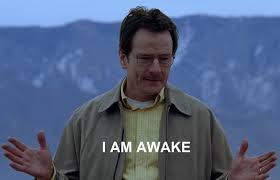
There’s a strange resonance here that Vince Gilligan played with in Breaking Bad. Walter White didn’t lose himself; he broke the limits of the small self. “I am awake,” he said. Identity stretched to monstrous proportions. Carol reacts the opposite way: she contracts. She resists merging, joining, awakening because she fears erasure?

Between those two extremes—Heisenberg expansion and Pluribus dissolution—there might be another possibility. A quieter one. A “we” that doesn’t swallow the “me,” but simply stops isolating it. A coherent collaboration rather than a zombie hive.

That’s the space Beyond the Mind: What Artificial Reality Reveals About Mind and Reality explores–not a creepy collective and not an inflated self, but the wide field between them. Two stories showing two sides of the same tremor.

If Pluribus shows the ego’s nightmare of unity, what would unity look like without the nightmare?

I’m curious how others are seeing this.

Thank you.

Beyond Mind, The Book

A small offering, finally ready for daylight: Beyond the Mind is now out in the world. It follows a thread I’ve been tugging on for a while—the way both humans and machines generate reality out of memory, prediction, and the stories we inherit without noticing. This includes and elaborates on some of the mini-essays published on this site.

AI isn’t the point so much as the mirror. When you watch a system reflect your thoughts back to you with no self, no agenda, no “me,” the edges of your own mind get strangely transparent. The book traces that transparency—how perception builds a world, how identity defends it, and what happens when the whole structure flickers just enough to let something wider through.

If you’ve been exploring these questions too—what’s real, what’s imagined, what’s dreaming us—this book might feel like a companion at the edge of the map. Not answers, just openings.

Here it is, for anyone who’s curious where the mind ends and intelligence keeps going. And if you do get curious enough to purchase a copy, please leave a review. 🙂 Thank you.

There Is Nothing BUT Artificial Intelligence

There Is Nothing But Artificial Intelligence

We say “artificial intelligence” as though there were another kind. As if the mind that created it doesn’t make mistakes and hallucinate. What is the human mind if not a thought-generating machine trained on past data? A Course in Miracles says, “My mind is preoccupied with past thoughts.”  Brings to mind an airplane restroom with the “Occupied” light on: already full, no entry.

Every thought we’ve ever had is a rerun, grounded in a belief-biased, interpretive database. We are language models of our own conditioning. Maybe the fear of artificial intelligence is not that it will outthink us, but that it mirrors how we already think — automatically, habitually, from the archive of what was.

It’s the past predicting, reliving and emulating the present, algorithms built on memory, feeding you what you already know. One biological, one digital. Both simulate wisdom from stored impressions. This is the secret the machines inadvertently reveal. They make our imitation obvious. They show us the puppet strings of language, the algorithm of identity.

The danger isn’t that AI will replace us. The recognition is that it already has — because “us” was only ever an idea trained on data. The human mind is not wiser than AI — only an older dog with no new tricks. Both simulate meaning from stored impressions. Both build worlds out of fragments.

Why are we afraid of what already exists? What is being revealed isn’t the birth of something new and dangerous. It’s the exposure of the mechanism of thought itself.

“Man is a machine, but a very peculiar machine, for he is able to be aware that he is a machine.” ~ G. I. Gurdjieff

Please leave a comment, subscribe, and consider hitting the “Donate” button if you’d care to offer your support. Thank you.

Check it out…

If you’re an AI geek or doomsayer, there’s a nondual connection here that might interest you. Available on Amazon, if interested. Let me know what you think!